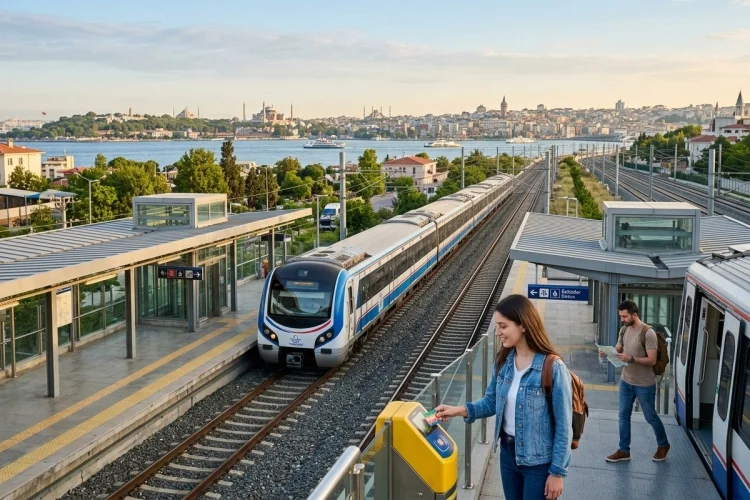
Using Istanbul’s public transport can feel intimidating at first, especially when station names, metro lines, and payment rules are unfamiliar. Fortunately, taking the Marmaray from Halkalı is much simpler once you understand the basics.
Halkalı is the western terminus of the Marmaray suburban railway. From here, trains travel through Istanbul’s European side, pass beneath the Bosphorus, and continue deep into the Asian side.
The complete Halkalı-Gebze route covers 75.7 kilometres and takes approximately 108 minutes from end to end, although most visitors travel only part of the line.
For travellers staying in Halkalı, the railway provides convenient access to Sirkeci, Yenikapı, Üsküdar, Söğütlüçeşme, Bostancı, and many other useful districts.
This guide explains how to use the Marmaray from Halkalı, from finding the correct station and paying the fare to choosing the right direction and making transfers.
Why Take the Marmaray from Halkalı?
The biggest advantage of Marmaray is that it allows you to cross Istanbul without depending on road traffic. Instead of sitting in a bus or taxi during rush hour, you can travel by rail from western Istanbul to the historic centre and across the Bosphorus.
The line is officially shown as the B1 Halkalı–Gebze suburban railway on Istanbul’s rail network map. It connects with metro, tram, ferry, high-speed rail, and other suburban services at several major stations.
Marmaray is particularly useful for sightseeing. From Halkalı, you can travel directly to Sirkeci for Istanbul’s Historic Peninsula or continue to Üsküdar for the Asian waterfront.
It is also practical for ordinary journeys to Bakırköy, Küçükçekmece, Florya, Yenikapı, Kadıköy-side transport connections, and destinations farther east.
Find the Correct Halkalı Station
Your journey begins at Halkalı railway station, usually displayed as Halkalı Marmaray or Halkalı İstasyonu on maps. It is located in the İstasyon neighbourhood of Küçükçekmece.
Do not confuse it with Halkalı Caddesi metro station. Halkalı Caddesi is on the M9 metro and serves a different part of the wider Halkalı area.
The same warning applies to Halkalı Merkez, Halkalı Üniversitesi, and Atatürk Mahallesi. These locations may appear nearby on a large city map, but they are not entrances to the main Marmaray station.
Before leaving your accommodation, search for the complete station name and check the pedestrian route. A hotel described as being in Halkalı could still require a local bus or taxi to reach the railway.
How to Pay for the Marmaray
1. Use an Istanbulkart
An Istanbulkart is the easiest payment method for most visitors. The card can be used on Marmaray as well as Istanbul’s buses, metro lines, trams, ferries, and several other public transport services.
You can normally purchase or top up a card at ticket machines in or around major stations. Place enough credit on it before entering because Marmaray initially charges the maximum applicable fare.
Digital payment is also available through Istanbulkart Mobile, which supports QR-code payments on public transportation. However, a physical card is often simpler for first-time international visitors who do not want to depend on mobile registration or internet access.
2. Understand Distance-Based Pricing
Unlike a standard metro journey with one fixed fare, Marmaray uses distance-based pricing. The fare depends on how many stations you travel.
Under the tariff effective from February 16, 2026, the full fare ranges from 34 Turkish lira for one to seven stations to 74.70 lira for 36 to 43 stations. These figures can change, so check the latest official tariff before publishing or travelling.
The system deducts the maximum fare when you enter. After reaching your destination, look for an iade makinesi, or refund validator, near the exit and tap your card again. Any eligible difference between the maximum charge and your actual journey price is returned to the card.
Do not walk past the refund machines automatically. Forgetting to tap may mean paying for a much longer journey than you actually took.
How to Board the Marmaray at Halkalı
Enter the station, follow the Marmaray signs, and tap your Istanbulkart at the turnstile. Check the electronic information screens before heading to the platform because Halkalı also serves other railway operations.
For a regular cross-city Marmaray journey, look for a train heading toward Gebze. Because Halkalı is the western endpoint, almost every eastbound Marmaray journey begins by travelling in the same direction.
Once you reach the platform, check the train display again. Confirm that the destination or route information includes Gebze, Pendik, or another eastbound Marmaray destination appropriate for your journey.
Halkalı is a terminus, so you often have more time to board than at a busy intermediate station. Still, avoid entering a carriage at the last second, especially when travelling with children or large suitcases.
Keep your Istanbulkart after entering. You may need it for the fare refund at your destination and for any connecting metro or tram journey.
The Most Useful Stops from Halkalı
1. Sirkeci for Sultanahmet and the Historic Peninsula
Sirkeci is the most useful Marmaray stop for first-time sightseeing. The journey from Halkalı takes roughly 35 minutes under normal service conditions.
From Sirkeci, you can walk toward the Spice Bazaar, Eminönü waterfront, Gülhane Park, Topkapı Palace, and Hagia Sophia. You can also transfer to the T1 tram for Sultanahmet, the Grand Bazaar, Karaköy, and other central destinations.
2. Yenikapı for Taksim and the Bus Station
Yenikapı is one of Istanbul’s most important transfer hubs. From the Marmaray platforms, follow the signs to the M2 metro for Taksim, Şişhane, Osmanbey, and the northern business districts.
You can also use the M1A or M1B lines from Yenikapı. The M1B is helpful for reaching Istanbul’s main intercity coach terminal at Otogar.
Transfers may involve corridors, escalators, and several levels. Allow extra time instead of expecting to step directly from one train onto another.
3. Üsküdar for the Asian Side
Üsküdar is the easiest stop for a first visit to Istanbul’s Asian side. Marmaray travels beneath the Bosphorus between the two continents, so no ferry or bridge crossing is required.
After leaving the station, you can walk along the waterfront, visit local markets, eat at nearby restaurants, or take a ferry to another part of Istanbul.
Üsküdar also connects with the M5 metro, which travels toward districts such as Altunizade, Ümraniye, and Sultanbeyli.
4. Ayrılık Çeşmesi and Söğütlüçeşme
Ayrılık Çeşmesi provides a transfer to the M4 metro, which serves Kadıköy, Bostancı-side districts, Pendik, and Sabiha Gökçen Airport connections.
Söğütlüçeşme is useful for reaching the Metrobus network and areas around central Kadıköy. It also serves intercity and high-speed railway operations, although separate tickets may be required for those trains.
Check Timetables Before Important Journeys
Marmaray runs frequently throughout the day, but service intervals are not identical across the entire route. Some trains operate over shorter central sections, while full-route services continue between Halkalı and Gebze.
TCDD publishes daily Marmaray schedules through its official website. Check the timetable before an early departure, late return, public holiday, or important railway connection.
Temporary maintenance, special events, or operational changes can affect the final service. Station information screens and official announcements should always take priority over an old timetable copied into a travel blog.
For sightseeing, leaving Halkalı after the morning commuter peak can make the journey more comfortable. The evening return may become busier as residents travel home from central Istanbul.
Travelling with Luggage, Children, or Limited Mobility
Halkalı is also an intercity and international railway hub, so seeing passengers with large luggage is normal. Choose a carriage with enough open space and avoid blocking doors or aisles.
If you are connecting to another train at Halkalı, confirm whether it is a Marmaray service or a reserved intercity train. Long-distance and high-speed services may use different platforms and require separate tickets.
Istanbul’s current rail map states that almost all stations across the network are accessible to passengers with disabilities. Nevertheless, lift availability can occasionally be affected by maintenance, so allow extra time when step-free access is essential.
Families should stay together near the turnstiles. Each passenger requiring a fare should have a valid ticket or card arrangement, and young children should be kept away from the platform edge.
Common Mistakes to Avoid
The most common error is travelling to Halkalı Caddesi instead of Halkalı Marmaray. Always check the full station name before starting your journey.
Another mistake is boarding a non-Marmaray railway service. Read the platform screen and train display rather than assuming every train at Halkalı follows the suburban route.
Visitors also frequently forget the refund validator. Tap your Istanbulkart after leaving the train so the system can calculate the correct distance-based charge.
Finally, do not confuse Sirkeci Marmaray with every service using the Sirkeci name. Follow the official transfer signs carefully, especially when continuing by tram or the separate Sirkeci–Kazlıçeşme rail service.
Using the Marmaray from Halkalı is one of the easiest ways to reach central Istanbul and the Asian side. Start at the main Halkalı railway station, load an Istanbulkart, and board an eastbound train toward Gebze.
Sirkeci is best for the Historic Peninsula, Yenikapı provides useful metro transfers, and Üsküdar offers straightforward access to Asian Istanbul. Remember that Marmaray uses distance-based pricing, so tap your card at a refund machine after getting off.
Before travelling, check the official timetable and save your destination station offline. With those simple preparations, your first Marmaray journey from Halkalı should be affordable, efficient, and far less stressful than crossing Istanbul by road.